
Six weeks before the largest financial transaction of my life, the bank changed its mind.
The loan officer called me on September 15th, 2008, the day Lehman Brothers filed for bankruptcy. I was driving home from work. He was apologetic but plain about it: the bank knew it had signed the paperwork to advance the funds for the mortgage on my apartment building, and it could not move forward as planned.
I had a signed commitment. I had a nonrefundable one hundred thousand dollar deposit already in the seller's hands. And as of that phone call, I had no financing.
How I Got There
I should back up, because the story starts fifty years earlier with a butcher and a paintbrush.
My grandfather arrived in North America in the early 1950s with a suitcase, a wife, two children, and a few dollars. He didn't speak English. He found work as a butcher, saved every penny, and put those pennies into small apartment buildings. He refused to hire anything out. Every visit to his buildings, and I loved those visits because it meant time with him, he would touch up paint, replace bulbs, lay tile, fix a toilet, collect the rent. He wasn't a handyman. He was a butcher with a paintbrush. Nothing ever looked perfect, and he was as proud of those buildings as anything in his life.
He talked while he worked, in that heavy accent, and the things he said stayed said. You must finish the breadcrumbs on your plate; he was a war survivor, and no further explanation was ever offered. Don't overpay, but always buy quality, and quality meant three things: a good mattress, good shoes, and a good chair, because you are always in one of them. And the one that ran my working life: if you do something, do it right. Never cut corners, because the truth always comes out in the wash. I ran a company for twenty-seven years on that sentence.
Three things made his eyes twinkle: my grandmother, his family, and his buildings.
I knew someday I would own buildings too. By the summer of 2008, seventeen years into running my telecom company, I had the profits to do it. I found the right property after a few months of looking: a 21-unit building from the 1930s on a beautiful street in The Beaches in Toronto. An ugly building in a gorgeous location, in good condition, with rents well below market and a capitalization rate of 8.5 percent. The price was 1.65 million dollars. It needed a roof, a boiler, a driveway, and a list of engineering work. I was ready.
My son came with me when I walked the property. He was ten. I knew his exposure to the world was not yet complete when, somewhere in the hallways, he looked around and asked: "Do people actually live here?"
I put down my nonrefundable deposit in June of 2008. What I did not know was that a complete market meltdown was three months away.
The Call
Then September 15th, and that phone call. Forgetting a day like that is hard. Actually, it's impossible.
It had never occurred to me that a bank could walk away from signed paperwork. I didn't sleep for days. I had a nagging feeling that I was screwed, because I was. My options were ugly: walk away and eat the hundred thousand dollars, or find another bank in the exact week the global credit markets froze solid. I made the calls. No bank was lending. Even if one had been willing, there wasn't time to close a new loan before my deadline.
My lawyer sent a legal letter to the original bank. After a great deal of back and forth, they agreed to honour the loan, but at a new rate so unfavourable it felt like extortion. Now I had financing I didn't want on a building I wasn't sure I should buy while the world economy appeared to be ending.
I called the seller and told them the truth: I was prepared to walk away and lose my deposit, because buying in that environment at that interest rate was not a risk I could stomach. Then, uncertain what else to do, I asked them to take another fifty thousand dollars off the price.
Somewhat to my surprise, they agreed. And just like that, I was the new owner.
Closing Into the Storm
I closed on November 18th, 2008. The newspaper headline that day read "US Has Spent Over $4 Trillion to Combat Economic Crisis." I had a mortgage for roughly sixty percent of the building's value and no certainty I had done the right thing. I kept repeating Warren Buffett's line to myself like a mantra: be fearful when others are greedy, and greedy when others are fearful.
Then I leaned into the fear instead of away from it. I took my 2009 business profits and bought a second building, a high-end five-unit at a 7 percent cap rate. In 2010 I bought an 11-unit at 6.5 percent. In 2011 I bought a 12-unit in North Miami Beach at 8 percent, because South Florida real estate was on the floor. I sold that Miami building in 2016 for double what I paid; with fifty percent down, my five hundred thousand became about 1.6 million, a 220 percent return in five years. The Toronto buildings are worth close to triple what I paid, the mortgages are mostly gone, and the rents arrive every month like clockwork. I have written up the mechanics of the best of those deals here.
Here is a detail I didn't understand at the time. Through the whole ugly autumn of 2008, the pulled loan, the legal letter, the renegotiation, I slept badly but I felt alive. The week after the deal closed, with the crisis over and the building mine, I slept fine and felt strangely flat. I filed that away as exhaustion. It wasn't.
What I Actually Learned
The tidy lesson is the Buffett quote, and it's true as far as it goes. Deals like that building only exist inside windows of fear, and the windows are short.
But the honest lesson has two more parts. First, none of the nerve matters without liquidity. The only reason I could stand at that table in November 2008 was that my cash wasn't trapped somewhere. I've written about how I learned that particular lesson the expensive way, in The Year I Lost Sixty Percent.
Second, I got lucky, and pretending otherwise would be rewriting history. The bank could have refused the legal letter. The seller could have said no and kept my hundred thousand. Toronto real estate could have gone the way of Phoenix. The line between "shrewd buyer in a crisis" and "cautionary tale" was thinner that November than it looks from here.
My grandfather never used words like capitalization rate or leverage. He painted hallways and collected rent and understood something I had to nearly lose a hundred thousand dollars to learn: a building you can hold through the storm will take care of you on the other side of it. Mine have. His did.
He never saw any of it. He died in the summer of 2002, six years before I bought the first building. The last time I visited him in the hospital he was barely coherent, and I leaned in and whispered that the business was doing well, that I was going to be okay, that I would make him proud. It was exactly what he wanted to hear.
He would have liked that ugly building in The Beaches. He would have repainted the lobby himself.
That is the version of 2008 with the numbers in it. There is another version running underneath it the whole time, and it started four years earlier with a letter.
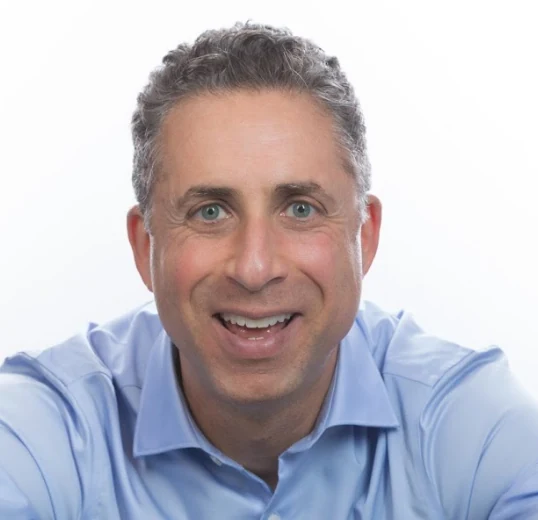
Jeff Wiener founded Digitcom, a Canadian telecommunications company, in 1991 at age 23 and ran it for 27 years, growing it into an eight-figure business named one of Canada's fastest-growing companies five years running. He sold it to a private equity firm in 2017 and semi-retired at 49. He now invests in multi-family real estate and writes about building wealth, selling a business, and the second act.