
In 2018 I wrote a 44,000-word book about building a business. Chapter 19 was called "Take Care of You." It was 232 words long. I put it at the end, and I said so right in the text, because I didn't want it to distract from the important parts.
Five years later, in August 2023, I was training for the US pickleball championships.
I want you to notice what that sentence is before I tell you what happened. I was 55 years old, six years into semi-retirement, and I had a coach. I had committed to two hours a day, five days a week, through the following April. I was a decent player, a 3.75, maybe a 4.0, and decent wasn't the point. The point was that there was a championship, which meant there was a bracket, which meant there was a ladder to climb, and I had found it. I had sold the company, stepped off every scoreboard I'd spent 27 years on, and then gone out and located a new one with the reliability of a homing pigeon. The chase doesn't care what it chases. That August, I just thought I was staying fit.
The gym was very hot that day. I was dehydrated and didn't know it, or didn't respect it. I finished playing at one o'clock and got in the car.
About five minutes from my house, I knew something was wrong. Not chest-clutching, movie wrong. Faint. The world going thin at the edges, like standing up too fast, except I was sitting down and it wasn't passing. I remember doing the math a driver does: closer to home than to anywhere else. Keep going.
I made it into the driveway. My wife was in the garage, packing the car. We were leaving that afternoon for a weekend at the cottage with friends. I could barely get out of the car. I asked her to call an ambulance.
It came within five minutes. By then I was barely conscious. The paramedics ran the ECG in our driveway, and the leads showed an elevated ST segment. A STEMI, in the language I would later learn fluently. The kind of heart attack where a major artery is fully blocked and the muscle it feeds is dying in real time, and the treatment is measured in minutes, not hours.
They rushed me in, my wife beside me, straight to the cath lab.
I remember almost nothing of the ride. What I remember is the ceiling. The perspective you get from an ambulance stretcher, flat on your back, watching the lights scroll past overhead, one after another, while people move quickly around you and none of it is up to you anymore. I had spent my whole life being the one who handled things. From that angle, you handle nothing. You watch the lights.
Afterward, the cardiologist told me I had made it by five minutes. That was the margin. Not five minutes until it would have been worse, or more complicated, or harder to treat. Five minutes from death. I have negotiated a lot of margins in my life. I have never been on the wrong side of one that thin.
Here is a fact I have repeated to a couple hundred people in conference rooms since, and I will keep repeating it as long as anyone will sit still: the most common first symptom of cardiovascular disease is death. Not chest pain. Not shortness of breath. For a huge share of people, the first presentation of the disease is the fatal event. I got a warning that many people never get, and I got it five minutes wide.
And it was not from nowhere. Nothing is from nowhere. The blockage that nearly killed me had been under construction for decades, plaque accumulating quietly behind a slightly elevated ApoB and a creeping insulin resistance that no one was watching, least of all me. I had tracked my company's numbers every month for 27 years. Revenue, margin, pipeline, cash. I could tell you any of them from any year. I had never once tracked the numbers building in my own arteries. Two compounding curves, my whole adult life. I watched one of them daily and let the other one run in the dark.
I woke up about an hour after the procedure, and my kids were there.
I need to try to describe their faces, and I already know I'll fail. It was fear, but not only fear. It was a look that said: you have looked after us our whole lives, please don't go. Most people, if they're lucky, never see that look on their children's faces. I saw it. I have negotiated with banks, buyers, and private equity firms, and nothing anyone has ever said across a table has moved me the way that look did in one silent second. It resonates still. I suspect it always will.
That night they went home, my wife last, back to a half-packed car in the garage and the cancelled weekend. And the next morning I was alone in the cardiac ICU, leads on my chest, a monitor keeping score of the only metric that has ever actually mattered, and nothing to do at that hour but think.
I would love to tell you I had profound thoughts. Mostly I had one, and it was closer to arithmetic than philosophy. For my whole adult life, my priorities had run in an order I would have denied while living it every single day: wealth, then family, then health. Nobody says that order out loud. You just live it, ninety hours a week at a time, 232 words at a time. And lying there, the list flipped. Health, then family and friends, then wealth. Not because I had become wise overnight. Because my body had overruled me, and there is no appeal.
That morning I made two commitments, and I have kept both. The first was the new order of the list. The second was that I would understand what had just happened to me, mechanically, completely, the way I once understood telecom, because being nearly killed by a process I had never bothered to learn about offended me almost as much as it frightened me.
I have to be honest about what happened next, because this site exists to be honest about exactly this. The second commitment became the first thing the old engine grabbed. I went at cardiology the way I had gone at every business I ever built: obsessively, systemically, all the way down. I can tell you my ApoB today faster than my net worth, and nine years ago it was the reverse. Whether that's transformation or just the wanting in a lab coat, I've stopped pretending to know. What I know is that the same drive that helped build the blockage is now the thing keeping other people from theirs, and if the engine insists on running, that's the best road I've ever pointed it down.
It should not have taken this. That's the part I refuse to varnish. I had the money. I had the time. I had years of evidence, friends grinding themselves down after their own exits, a book on my own shelf with a 232-word health chapter I had personally filed under "distraction." None of it moved the list one position. A blocked artery moved it in one morning. I am not proud of that. I am not going to pretend the heart attack was a gift, either. It was a bill, decades in the drafting, and I happened to have five minutes' credit left when it came due.
There is one more chapter to this day, and I'm not going to write it. It belongs to the woman in the garage, who watched her husband barely make it out of a car, made the call, rode in the ambulance, and drove home alone that night to a half-packed car and an empty house. What that afternoon was like from her seat is her story, not mine, and the fact that I know better than to publish it is one of the few pieces of evidence that the list really did reorder.
She was there in a parking lot in 1992. She was there in the ambulance in 2023. The company came and went in between.
I'll be honest about one more thing. Writing this was hard. Speaking about that day, even now, brings a feeling of dread I can only describe as visceral, some part of the body remembering what the mind has organized into a story. I do it anyway, in conference rooms and on this page, because it helps people check numbers they'd otherwise never check. But I want it on the record that the composure is edited in. The dread is not gone. I've stopped expecting it to go.
It has a geography, too. I still find it difficult to play pickleball. On a court, sometimes, the body starts reliving that afternoon whether I've invited it to or not, and I would rather not. So I play occasionally now, carefully, which is its own strange arithmetic: I was training two hours a day for a national championship I never did enter, and the training may have hurried the very thing that ended it. The championship happened without me. As far as I know, nobody noticed the absence of one 4.0-rated 55-year-old from the bracket. I noticed. Not because I miss the bracket. Because it was the last scoreboard I ever fully believed in.
In August 2024, on the one-year anniversary, I drove back to the hospital with coffee and donuts and found the CICU nursing team and the floor nurses in the cardiac unit, and I thanked them. I did it again in 2025. I expect I'll do it in 2026, and for as long as I'm able. Not because I have to. Because I've spent my whole life keeping track of things, and this is the one appointment I never want to fall off the calendar: the reminder that I got five minutes' grace, and that gratitude, unlike everything else I ever measured, compounds only if you show up and pay it in person.
That's the event. What follows is the accounting: nine years, two companies, and everything the list reordering actually changed.
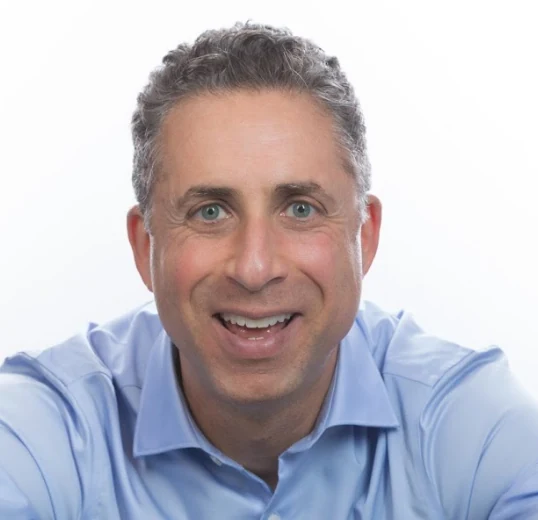
Jeff Wiener founded Digitcom, a Canadian telecommunications company, in 1991 at age 23 and ran it for 27 years, growing it into an eight-figure business named one of Canada's fastest-growing companies five years running. He sold it to a private equity firm in 2017 and semi-retired at 49. He now invests in multi-family real estate and writes about building wealth, selling a business, and the second act.