
On January 14th, 2017, I left for a walk on the beach in South Florida to figure out how to double my company's revenue. I planned to be gone an hour or two.
I came back six hours later having decided to sell it instead.
The Plan I Left With
We had just done it. December 2016 closed the books on a four-year goal: revenues doubled, profits tripled, the whole transformation that had started when my best employee quit and told me the truth on his way out. The machine was running better than it ever had.
So naturally, the question I carried onto the beach was: how do we do it again? New office space? Was the management team right for the next stage? What capital would it take, what product lines, what hires? I wanted quiet to think it through properly, and a long walk along the shore seemed like the right tool. I headed south with a head full of logistics.
It was an unusually warm January day on Marco Island. If you've ever been there, you'll know the beach. It seems impossibly wide, the sand so fine it almost feels like you're walking on baking soda. I had my headphones on.
I walked for three hours before I turned around.
The Song
The sun was high. The Gulf was almost unnaturally calm. Waves folded quietly onto the beach. The company had never been stronger. The machine finally worked without depending entirely on me. So why didn't I feel excited?
I kept walking.
Then a song came on. "On Top of the World."
To this day, I don't know why that song. It wasn't the lyrics. It wasn't the band. I hadn't attached any special meaning to it before, and I haven't since. But something happened. The closest description I have is that it felt like being tapped on the shoulder. Or maybe hit lightly in the arm. A sudden jolt that interrupted a conversation I had been having with myself for months without realizing it.
I stopped walking. I took off my headphones.
For the first time all afternoon, there was no music. Just the wind. The waves. The silence.
I stood there looking out at the Gulf and asked myself a question that felt almost rhetorical.
What am I doing?
Not what am I doing today. Not what am I doing about next year's revenue. What am I doing with my life?
The answer arrived before I had finished asking the question.
It was time. Not next year. Not after one more growth cycle. Not after we doubled again. Now.
Twenty-six years after opening the company, standing barefoot on a beach in Florida, I knew I was going to sell it.
What the Song Interrupted
The conversation it interrupted, the one I had been having with myself for months without hearing it, was simple. I didn't want to do it again.
It had been 26 years. And for 26 years I had genuinely loved the challenge. But standing on that beach, I was tired in a way that a vacation doesn't fix. Tired of managing people. Tired of the daily weight of cash flow and marketing and sales and staff and customers. Nobody was forcing me to keep doubling the company. I could have coasted. But coasting wasn't fun either, and I have never been able to do things that aren't fun for very long.
And there was something else, the thing underneath the tiredness that I had not been letting myself look at. Two months earlier, in November 2016, my wife's closest friend had been diagnosed with brain cancer. She was our age. Until that fall, I don't think I had ever seriously contemplated the fact that I was not going to live forever. It sounds absurd to write down, a 48-year-old man discovering mortality, but that is what happened. The diagnosis didn't give me an answer. It gave me a clock.
The question was no longer how do I double the company. It was: what are the things in life that will feed my inner soul? What do I actually want the years to be?
I walked up to one of the hotels along the beach, ordered a beer, took out my phone, and started typing notes for what would become the next stage of my life. Three things: more time with my family. See the world. And find a way to help other entrepreneurs build what I had built, because business was the thing I knew and loved, and I wasn't ready to stop loving it, only to stop carrying it.
That Monday I called the M&A advisors and said: it's time. I'm ready to sell.
The Letter
I flew back to Toronto with one more thing to do, and it was the part I was most nervous about.
It was my wife's birthday. I wrote her a long letter, everything from the beach, all of it on paper: the decision, the plans, the travel, the years I wanted us to have. And at the end of the letter I asked her to renew our wedding vows. Twenty-plus years in, I asked her to marry me again.
She said yes.
I planned the trip. I hired the photographer, and the person who would perform the ceremony, and picked the beach in Bali. Then Covid happened.
The renewal hasn't happened yet.
The sale closed that fall, in 2017, one year before my 50th birthday. Twenty-seven years, ended by a walk I had intended to spend on a growth plan.
What I'd Add Now
I believed I had found my "why" on that beach. Help entrepreneurs. Write, teach, share what I knew. And in a real sense I had; it produced most of what I have done since. But nine years later I can tell you the why did not hold still, and the wanting that walked south with me that morning walked back north with me too. It just changed clothes. That part of the story took more years, and eventually a heart attack, to understand, and it gets its own chapters. The walk was still the best decision I ever made. I just no longer confuse it with an answer.
Deciding to sell took six hours. The selling took a year, and cost more than anyone tells you.
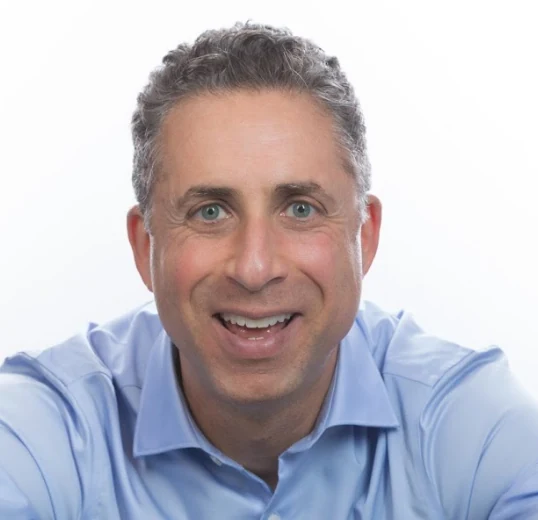
Jeff Wiener founded Digitcom, a Canadian telecommunications company, in 1991 at age 23 and ran it for 27 years, growing it into an eight-figure business named one of Canada's fastest-growing companies five years running. He sold it to a private equity firm in 2017 and semi-retired at 49. He now invests in multi-family real estate and writes about building wealth, selling a business, and the second act.